
First decide what kind of website you need
A local plumber mainly needs calls, service-area confidence, and proof. A salon needs treatment information and a reliable booking route. A restaurant needs menus, opening times, location, and reservations. A retailer needs products, payments, stock, delivery, returns, and operational reporting.
Write the three actions the site must perform and the information customers need before acting. This quickly removes platforms that are powerful in the wrong direction.
Wix: broad capability for hands-on owners
Wix is a practical all-rounder with a visual editor and a broad range of business tools. It is most suitable when the owner wants to make detailed changes and is willing to learn the system.
Check the current regional plan needed to connect a domain, remove platform branding, accept payments, add collaborators, and use the required business features. A free editing tier is not the same as a complete professional business setup.
Squarespace: strong visual discipline
Squarespace is a good candidate for service firms, portfolios, hospitality, and simple shops that value a polished visual foundation. The more constrained editing model can make it easier to stay consistent.
Review the current limits and fees for ecommerce, memberships, contributors, code customisation, and third-party services. A beautiful starting point still needs specific copy, real proof, accessible structure, and careful mobile checks.
WordPress.com and Shopify: choose for the operating model
WordPress.com can suit a content-led organisation that expects a large advice library or more publishing flexibility. Plans differ in themes, plugins, storage, support, and commercial features, so confirm the level that supports the intended build.
Shopify is a stronger default when selling products is the core business operation. It includes commerce infrastructure, but the subscription is only part of the cost: payment processing, premium themes, apps, product content, and ongoing merchandising still matter.
When done-for-you is the best builder
If the website keeps slipping down the list, the owner dislikes writing, or the business needs a clearer position, buying more flexible software may not solve the problem. A focused professional service can be better value because it supplies decisions and execution, not just tools.
Ask for a clear scope, ownership terms, recurring costs, examples of relevant work, and an explanation of what support remains after launch.
Takeaway — The best builder is the route that produces the right customer journey and that the business can realistically maintain.
Real client work
Built for real businesses and real enquiries
These are live client websites, each planned around a different customer decision and conversion route.
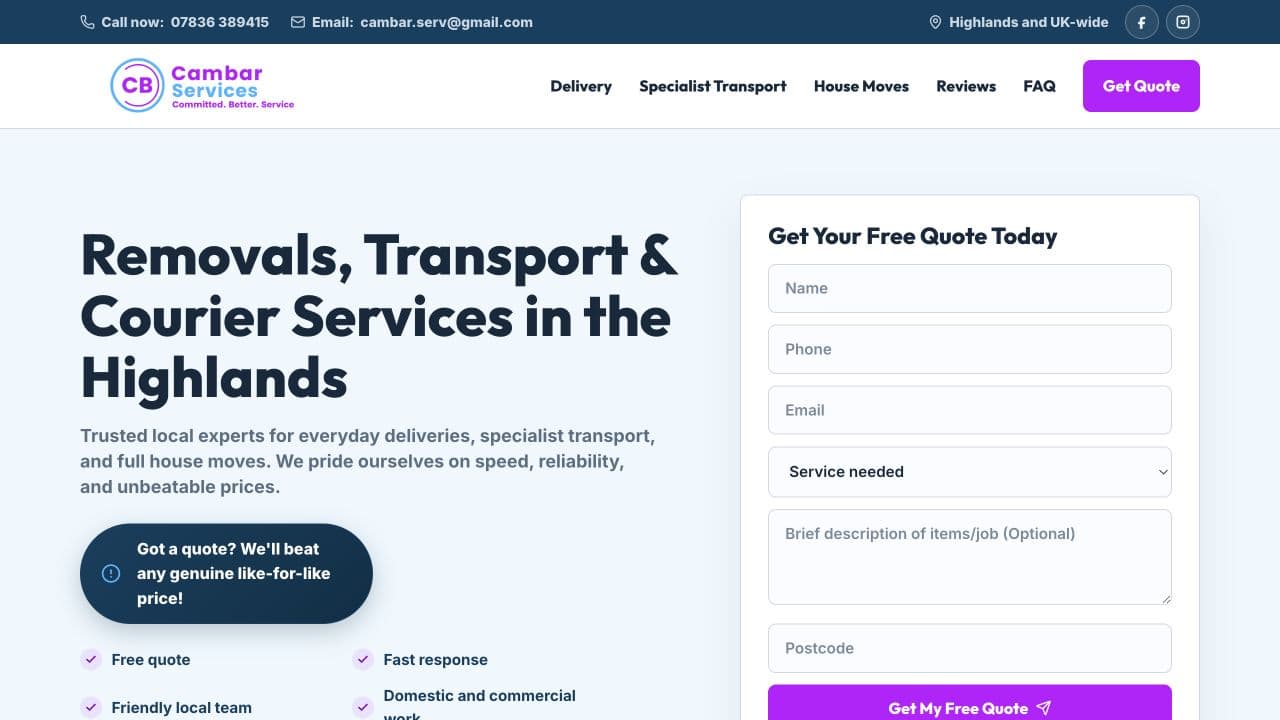
Cambar Services
Built for quote enquiries
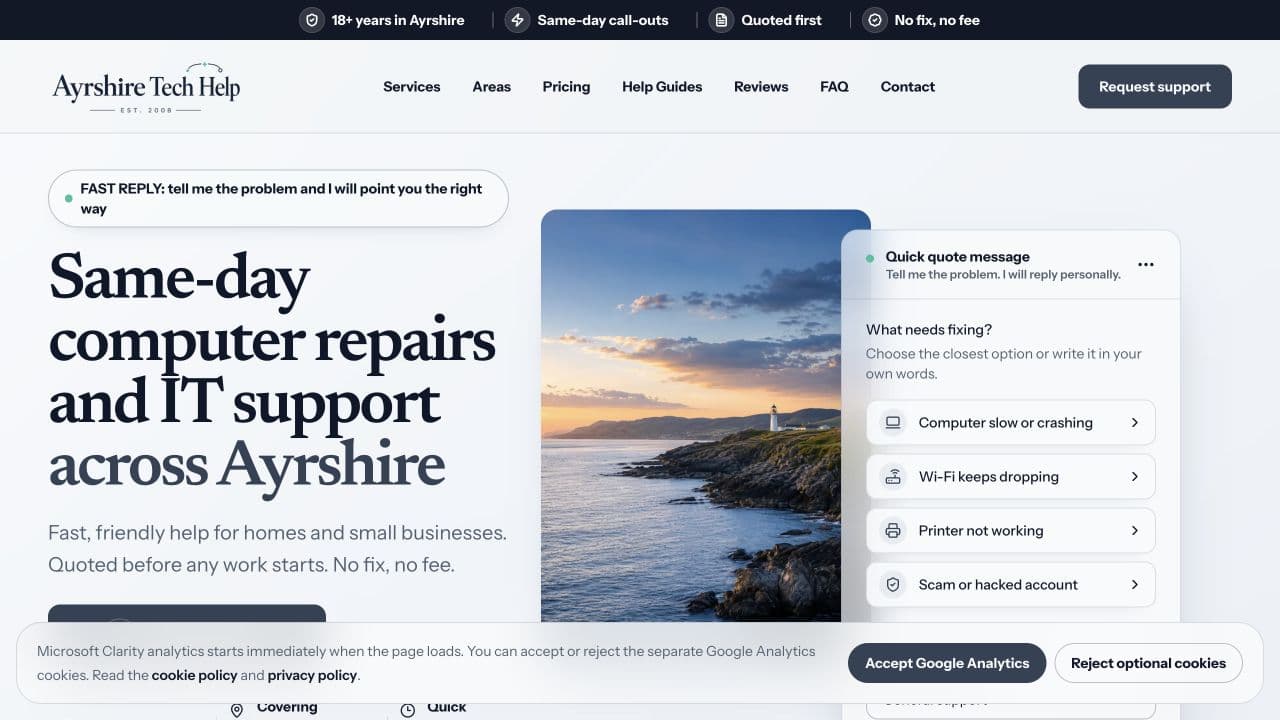
Ayrshire Tech Help
Built for local support enquiries
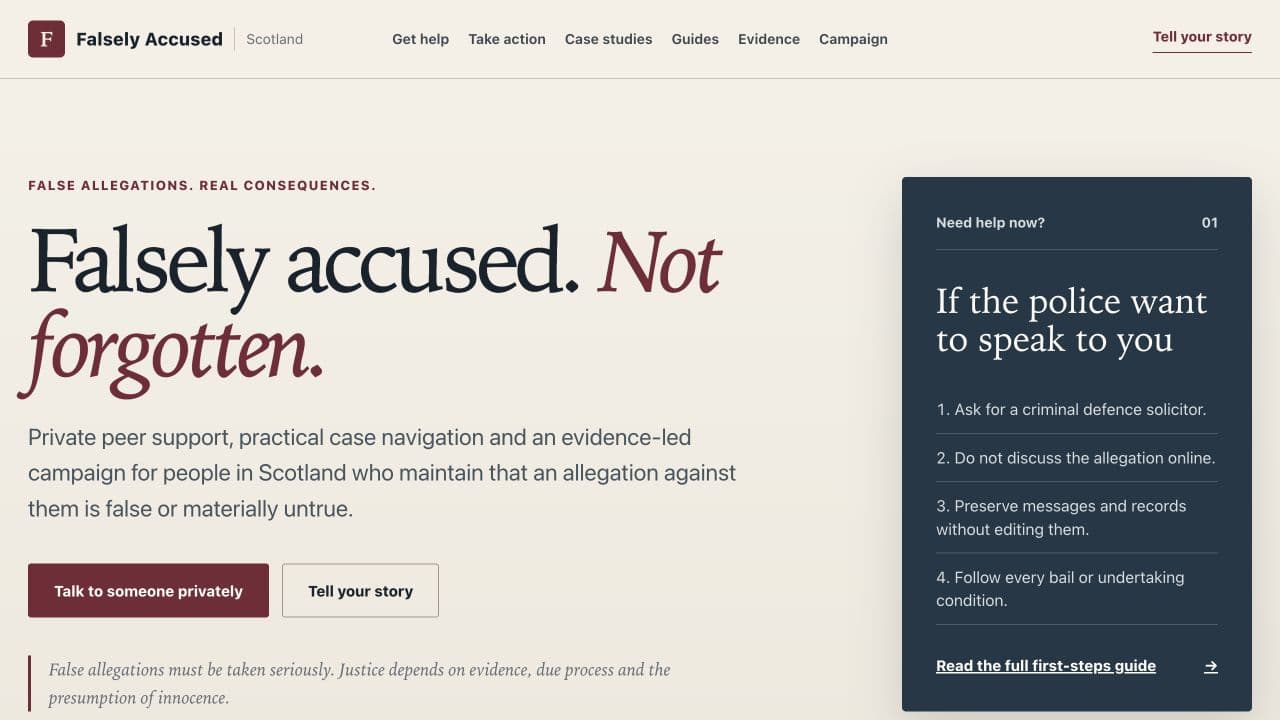
Falsely Accused Scotland
Built for clarity and safe navigation
Useful next step
See whether a £200 bespoke build is the better fit
Compare a focused done-for-you website with the time, subscriptions, and decisions involved in building the site yourself.
See whether a £200 bespoke build is the better fitSources
- Wix Premium plan pricing — Wix
- Squarespace pricing plans and features — Squarespace
- WordPress.com pricing — WordPress.com
- Shopify UK pricing — Shopify
- Creating helpful, reliable, people-first content — Google Search Central